-
Abraços-Duarte, G.; Ramos, S.; Valente, F.; Silva, E. B. da;
Figueiredo, E.
2021. Functional Response and Predation Rate of
Dicyphus cerastii Wagner (Hemiptera: Miridae).
Insects 12: 530.
DOI:
10.3390/insects12060530
-
Alayo, D. P. 1974.
Los Hemipteros de Cuba. Parte XIII. Familia Miridae.
Torreia 32: 41 pp.
-
Brígida Souza, B.; Vázquez, L. L.; Rosangela, C. M.
(eds.). 2019.
Natural Enemies of Insect Pests in Neotropical Agroecosystems
(Biological Control and Functional Biodiversity)
.
Springer Nature Switzerland AG. 546 pp.
DOI:
10.1007/978-3-030-24733-1
-
Bueno, V. H. P.; Van Lenteren, J. C. 2021.
Procedimentos específicos para encontrar o melhor inimigo natural de
Tuta absoluta.
Archivos Académicos USFQ 36: 1–105.
Memorias del II Congreso de Control Biológico Aplicado.
-
Bueno, V. H. P.; Montes, F. C.; Sampaio, M. V.; Calixto, A. M.;
Van Lenteren, J. C.
2018. Performance of immatures of three Neotropical Miridae at five
different temperatures, reared on Ephestia kuehniella eggs
on tobacco plants.
Bulletin of Insectology 71(1): 77–87.
-
Bueno, V. H. P.; Van Lenteren, J. C.; Montes, F. C.
2021. Por que os mirídeos predadores são interessantes agentes de
controle biológico? In:
Controle alternativo de pragas e doenças: opção ou necessidade?
(eBook EPAMIG).
-
Burla, J. P.; Carpintero, D. L.; Castiglioni, E.
2021. First report of Engytatus varians (Distant, 1884)
(Heteroptera: Miridae: Dicyphini) in Eastern Uruguay and preliminary
test on its feeding habits.
Entomological Communications 3: ec03021.
DOI:
10.37486/2675-1305.ec03021
-
Maldonado Capriles, J. 1969.
The Miridae of Puerto Rico (Insecta, Hemiptera).
University of Puerto Rico Agricultural Experiment Station,
Technical Paper 45: 133 pp.
-
Carvalho, J. C. M. 1945.
Mirídeos Neotropicais, XIX: gênero Macrolophus Fieber, com
descrição de duas espécies novas e Solanocoris n. g.
(Hemiptera).
Revista Brasileira de Biologia 5(4): 525–534.
-
Carvalho, J. C. M.; Gagné, W. C. 1968.
Miridae of the Galapagos Islands (Heteroptera).
Proceedings of the California Academy of Sciences
(4)36: 147–219.
-
Cassis, G.; Schuh, R. T. 2012.
Systematic, biodiversity, biogeography, and host associations of the
Miridae (Insecta: Hemiptera: Heteroptera: Cimicomorpha).
pp. 377–404.
-
Cazorla, D. 2021.
Listado comentado de Miridae
(Hemiptera: Heteroptera: Cimicomorpha) de Venezuela.
Revista Nicaragüense de Entomología 243: 1–91.
-
Clavo, F. J. 2021.
Míridos para el control de plagas en tomate: ¿Amigos o enemigos?
Archivos Académicos USFQ 36: 1–105.
Memorias del II Congreso de Control Biológico Aplicado.
-
Diaz, B. H. L.; Gil, T. R.; Benítez, M. del T.; Cabrera, I. M.
2016. Consumo y respuesta funcional de
Nesidiocoris tenuis Reuter (Hemiptera: Miridae) frente a
estadios inmaduros de Bemisia tabaci Gennadius
(Hemiptera: Aleyrodidae).
Revista Protección Vegetal 31(3): 217–223.
-
Distant, W. L. 1884.
Insecta. Rhynchota. Hemiptera-Heteroptera.
Biologia Centrali Americana 1: 265–304.
-
Duarte, S.; Almirall, A. L. 2020.
Diversidad de insectos asociados a siete cultivos en el sistema de
cultivo organopónico “1ro de julio” de La Habana.
Revista Científica Agroecosistemas 8(2): 58–65.
-
Ferreira, P. S. F.; Henry, T. J. 2011.
Synopsis and keys to the tribes, genera, and species of Miridae
(Hemiptera: Heteroptera) of Minas Gerais, Brazil.
Part I: Bryocorinae.
Zootaxa 2920: 1–41.
-
Fieber, F. X. 1858.
Criterien zur generischen Theilung der Phytocoriden
(Capsini auct.).
Wiener entomologische Monatschrift
2: 289–327, 329–347.
-
Franin, K. et al. 2021.
True bugs (Heteroptera) assemblage and diversity in the ecological
infrastructures around Mediterranean vineyards.
Bulletin of Insectology 74(1): 65–78.
-
Hernandez, L. M.; Henry, T. J. 2010.
The plant bugs, or Miridae (Hemiptera: Heteroptera),
of Cuba.
Pensoft Series Faunistica 92: 212 pp.
-
Jung, S.; Lee, S. 2012.
Molecular phylogeny of the plant bugs (Heteroptera: Miridae) and the
evolution of feeding habits.
Cladistics 26: 50–79.
-
Konan, K. A. J. et al. 2021.
Combination of generalist predators,
Nesidiocoris tenuis and Macrolophus pygmaeus,
with a companion plant, Sesamum indicum.
PLoS ONE 16(9): e0257925.
DOI:
10.1371/journal.pone.0257925
-
Mama Sambo, S. et al. 2022.
Identification, microhabitat, and ecological niche prediction of two
promising native parasitoids of Tuta absoluta in Kenya.
Insects 13: 496.
DOI:
10.3390/insects13060496
-
Namyatova, A. A.; Konstantinov, F. V.; Cassis, G.
2016. Phylogeny and systematics of the subfamily Bryocorinae based
on morphology.
Systematic Entomology 41: 3–40.
-
Nogueira, B. C. F. et al. 2019.
Associações de percevejos mirídeos
(Hemiptera: Miridae) com plantas no Brasil.
Biológico 81: 1–30.
-
Nogueira, B. C. F. et al. 2019.
Plant Bugs Predators
(Hemiptera: Heteroptera: Miridae) with references to
arthropods and fungi in Brazil.
Anais da Academia Brasileira de Ciências 91(3): 1–9.
-
Paterson, I. D. et al. 2016.
Two in one: cryptic species discovered in biological control agent
populations using molecular data.
Ecology and Evolution 6(17): 613–950.
-
Pérez-Hedo, M. et al. 2021.
Biological traits of the predatory mirid
Macrolophus praeclarus.
Bulletin of Entomological Research 111(4): 429–437.
DOI:
10.1017/S0007485321000067
-
Polack, L. A. et al. 2021.
Control biológico en tomate con el mírido
Tupiocoris cucurbitaceus.
Instituto Nacional de Tecnología Agropecuaria (INTA),
Argentina. 14 pp.
-
Poppius, B. 1914.
Die Miriden der Äthiopischen Region II – Macrolophinae,
Heterotominae, Phylinae.
Acta Societatis Scientiarum Fennicae 44(3): 136 pp.
-
Roda, A. et al. 2020.
Biological control potential and drawbacks of three
zoophytophagous mirid predators against Bemisia tabaci
in the United States.
Insects 11(10): 670.
-
Saulich, A. Kh.; Musolin, D. L. 2019.
Seasonal development of plant bugs (Heteroptera, Miridae):
subfamily Bryocorinae.
Entomological Review 99(3): 275–291.
-
Southwood, T. R. E.; Leston, D. 1959.
Land and Water Bugs of the British Isles.
Frederick Warne and Co., London. 436 pp.
-
Strassera, M. E. 2021.
La potencialidad de Tupiocoris cucurbitaceus (Spinola)
como agente de biocontrol en la horticultura.
Cultivos Intensivos Bajo Cubierta 2(2): 18–23.
-
Urbaneja, A. et al. 2022.
Special issue on recent advances in zoophytophagous arthropods for
agroecosystems sustainability.
Journal of Pest Science 95: 1469–1471.
-
Van Duzee, E. P. 1923.
Expedition of the California Academy of Sciences to the Gulf of
California in 1921. The Hemiptera.
Proceedings of the California Academy of Sciences
(4)12: 123–200.
-
Vélez, M. L. A.; Coelho, D. S.; Martins, D. S.;
Ferreira, P. S. F.
2020. Survey of the Heteroptera (Hemiptera) on pastures from
Espírito Santo state, Brazil.
EntomoBrasilis 13: e907.
DOI:
10.12741/ebrasilis.v13.e907
-
Wagner, E. 1961.
Unterordnung: Ungleichflügler, Wanzen, Heteroptera (Hemiptera).
Die Tierwelt Mitteleuropas 4: 1–173.

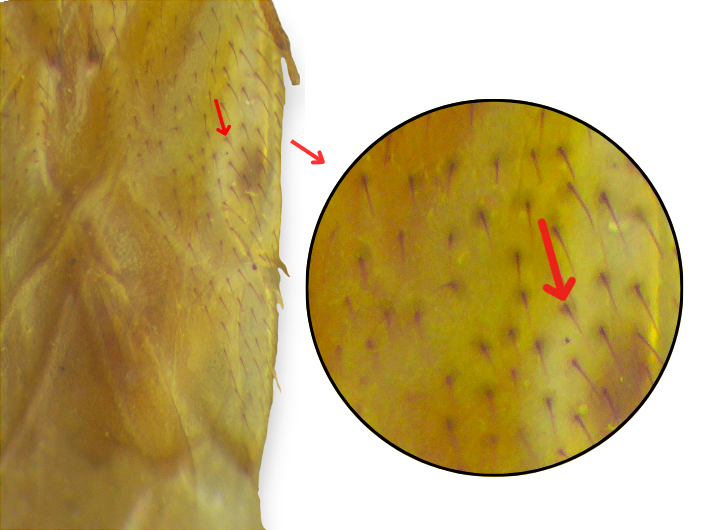 ;
comprimento corporal de aproximadamente 4,0 mm; genitália masculina
Fig. 2
;
comprimento corporal de aproximadamente 4,0 mm; genitália masculina
Fig. 2
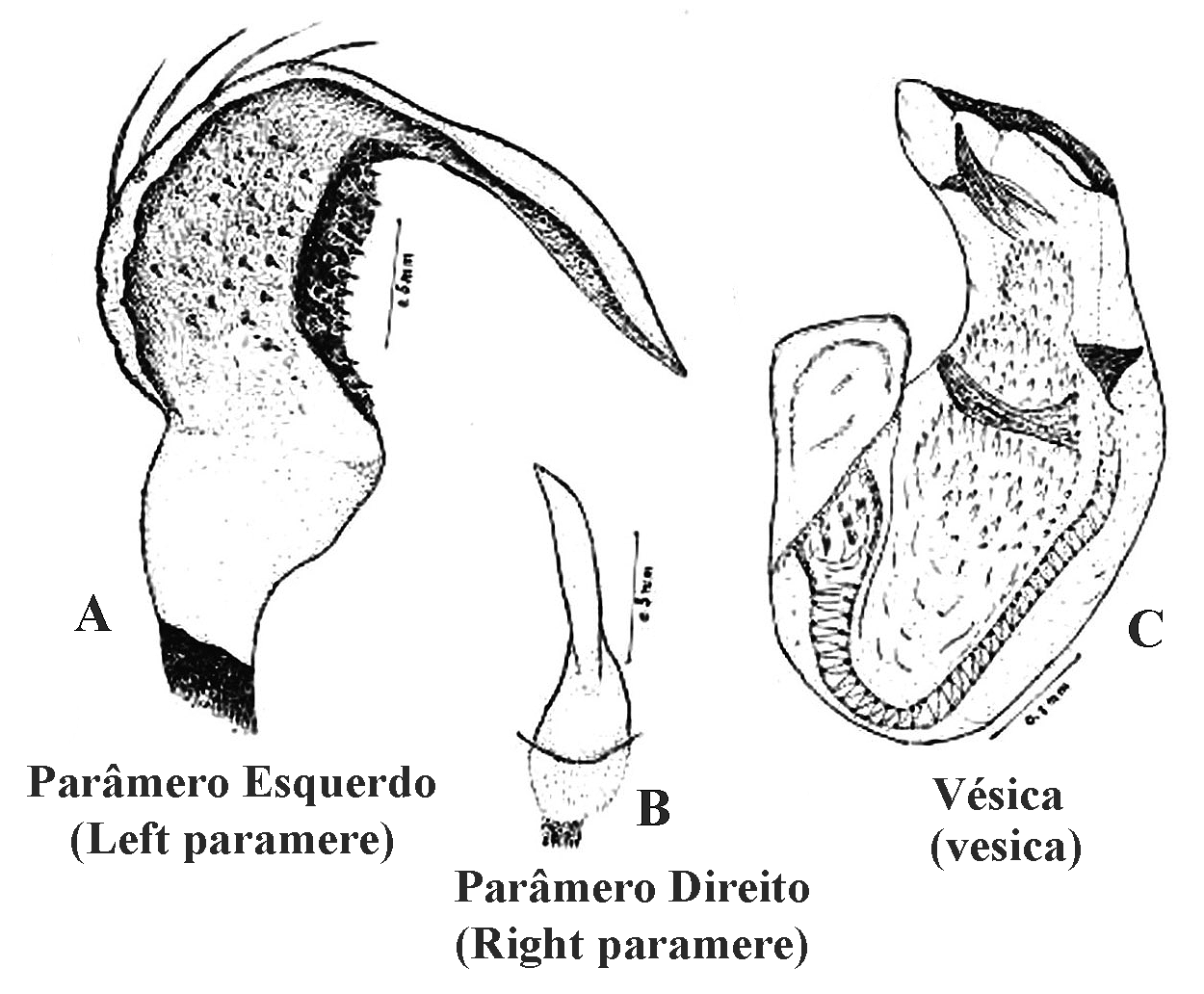 .
.
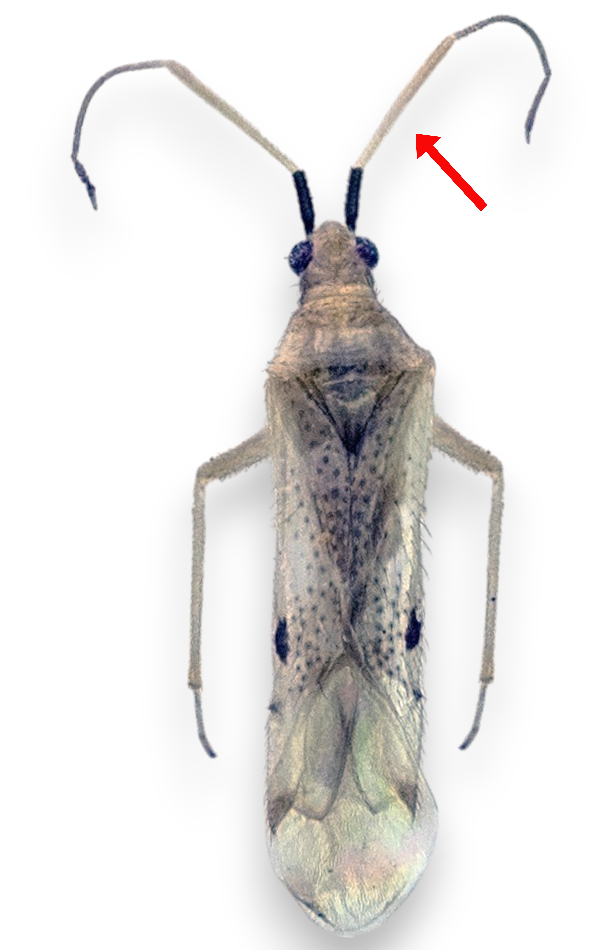 ;
genitália masculina
Fig. 4
;
genitália masculina
Fig. 4
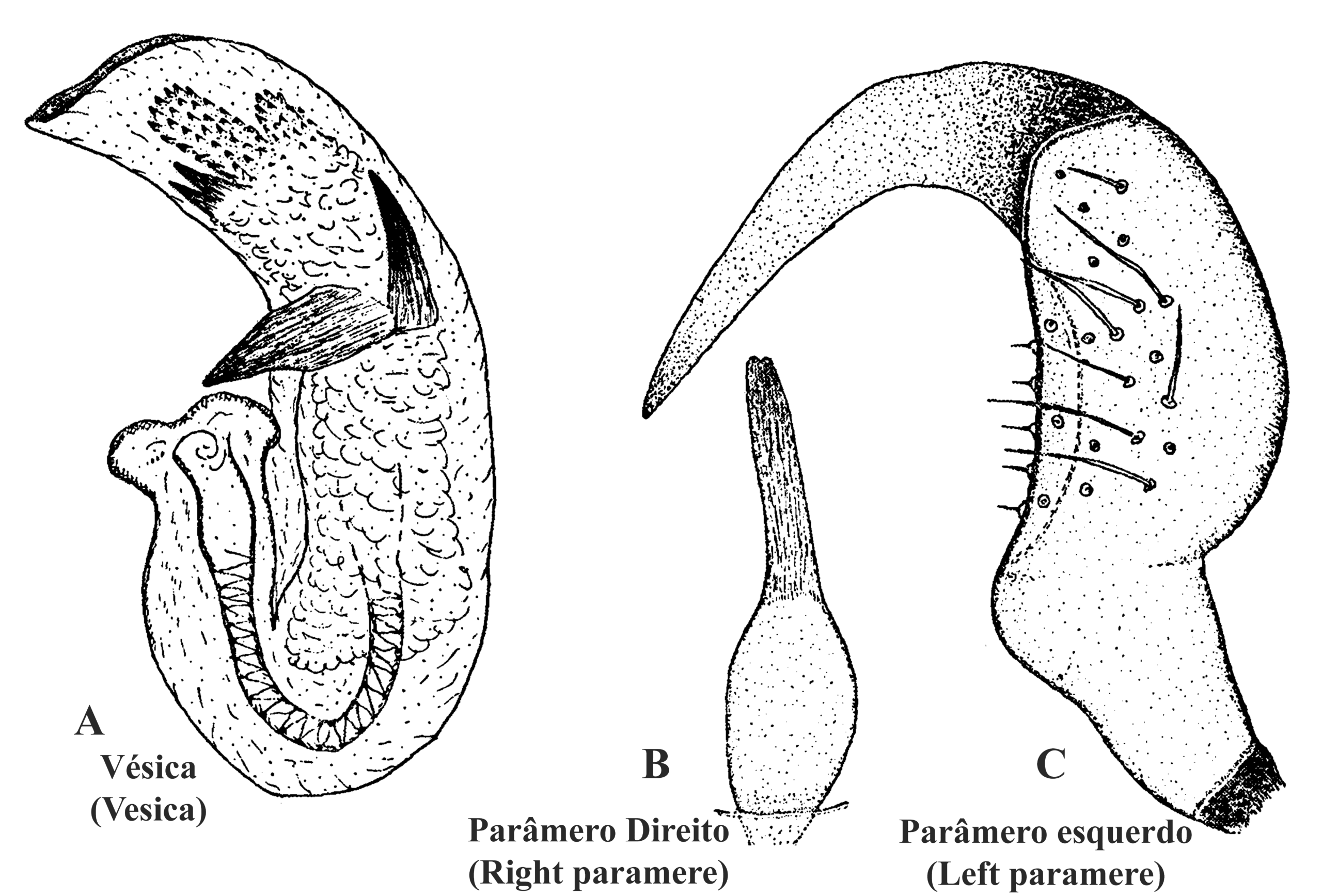 .
.
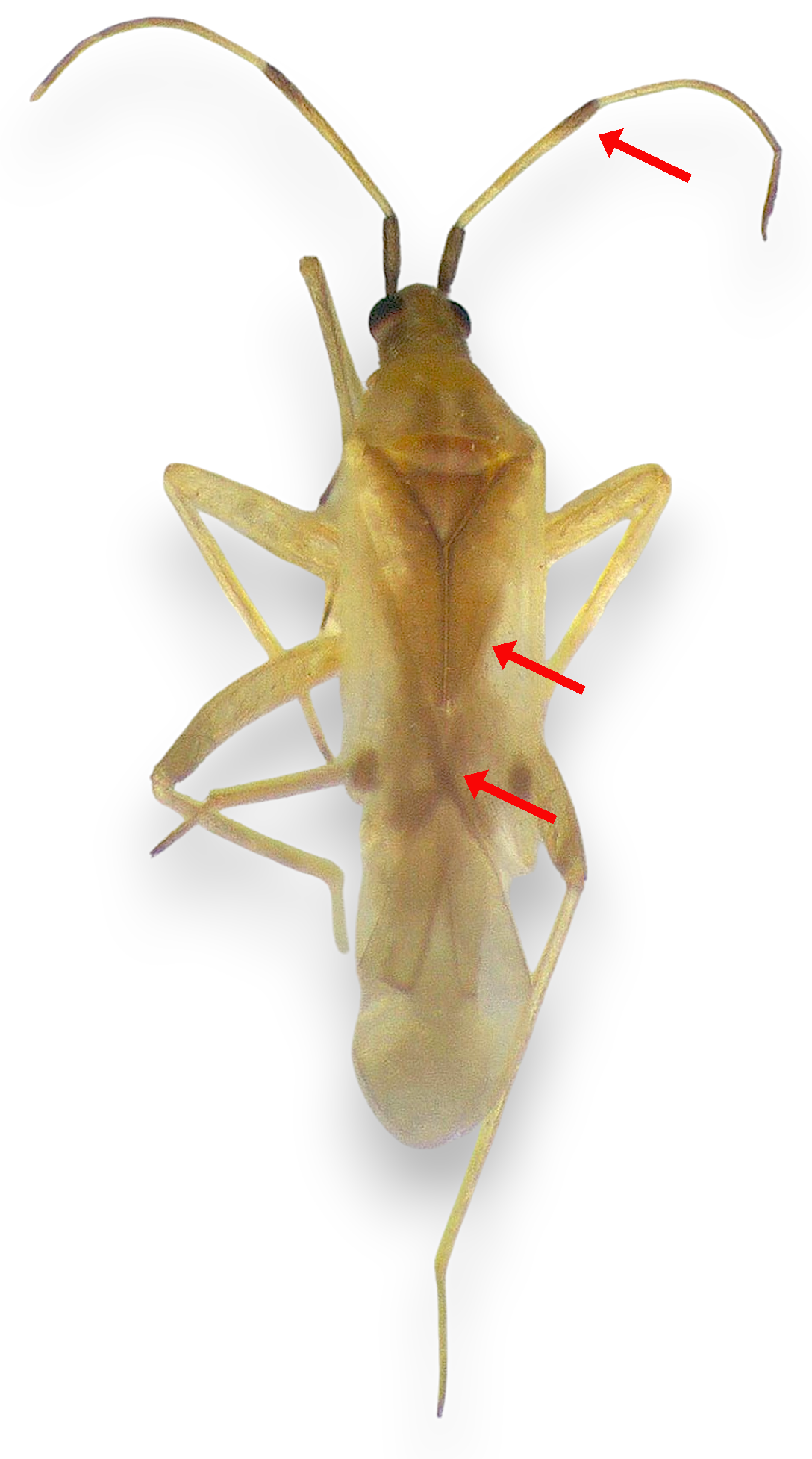 ;
cório com duas manchas esbranquiçadas
Fig. 6
;
cório com duas manchas esbranquiçadas
Fig. 6
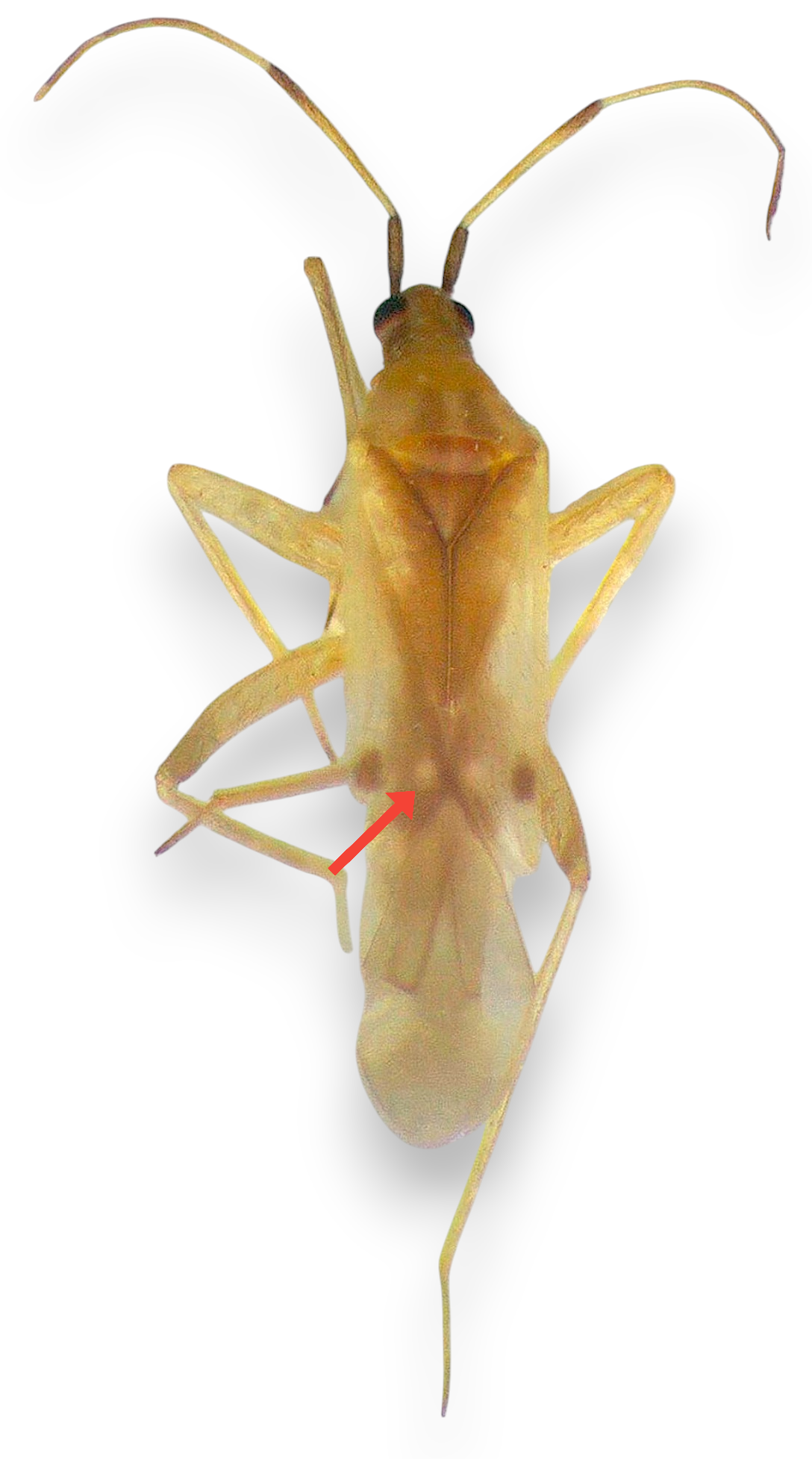 ;
genitália masculina
Fig. 7
;
genitália masculina
Fig. 7
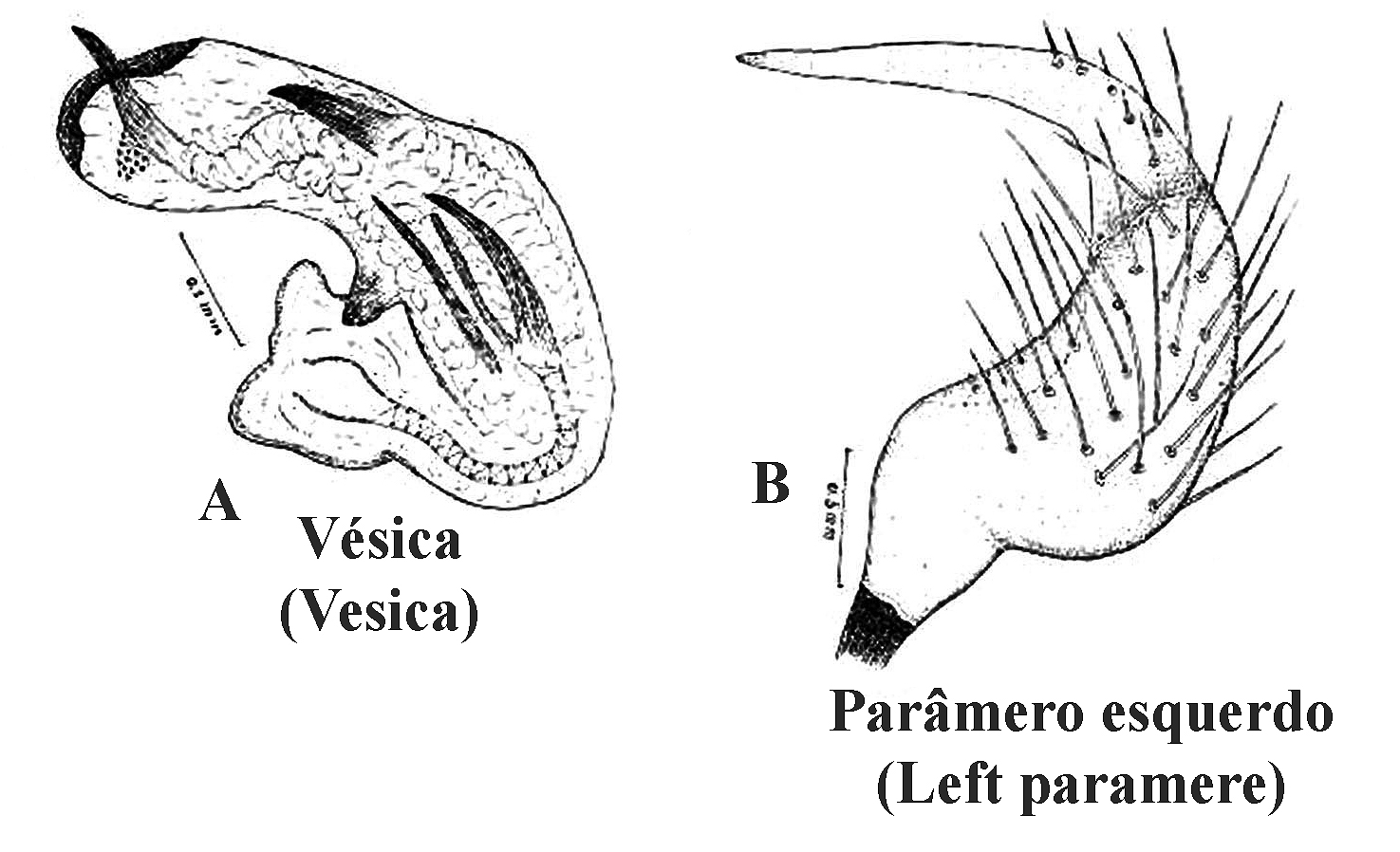 .
.
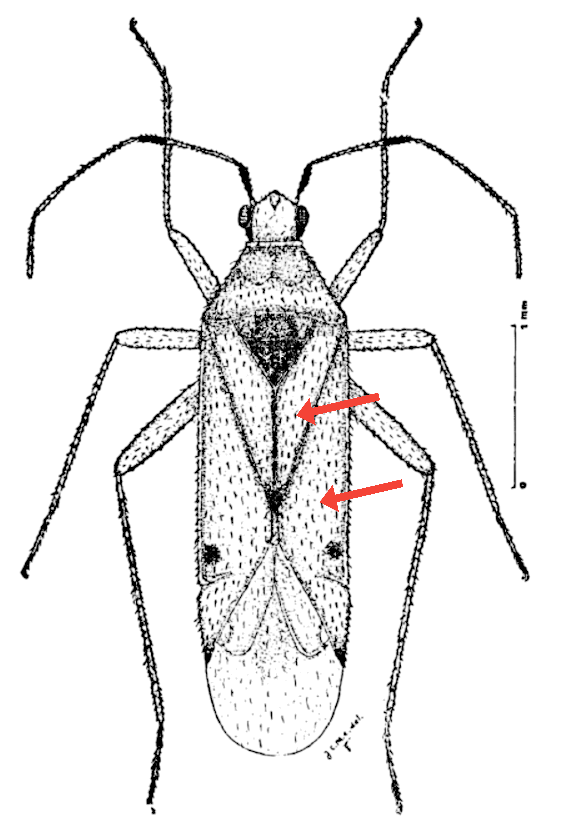 ;
genitália masculina
Fig. 9
;
genitália masculina
Fig. 9
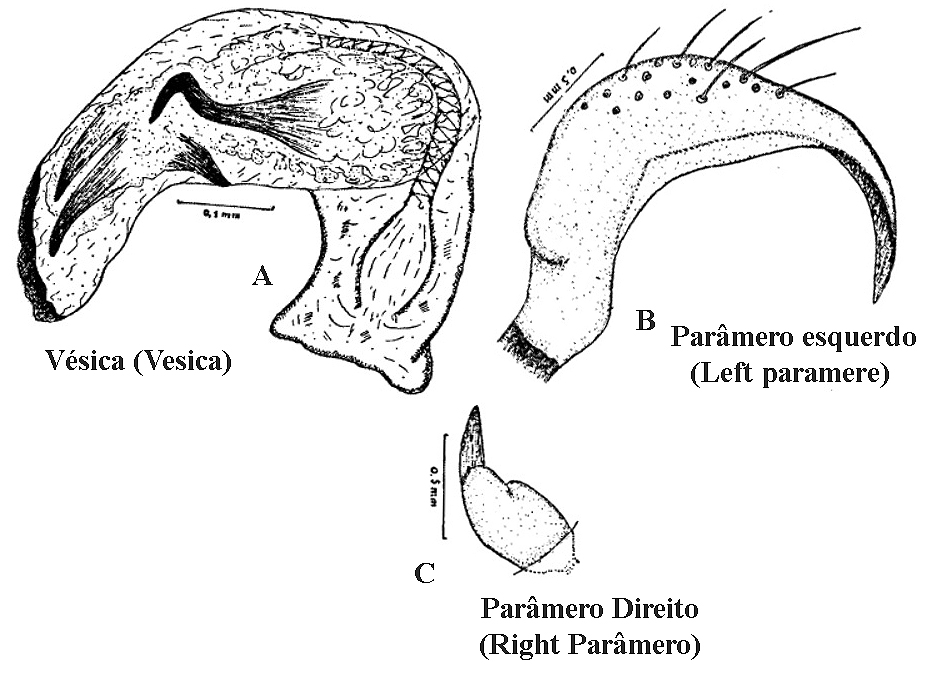 .
.